Western Europe demo
Funchal 1 (PT)
Funchal 2 (PT)
Lisbon (PT)
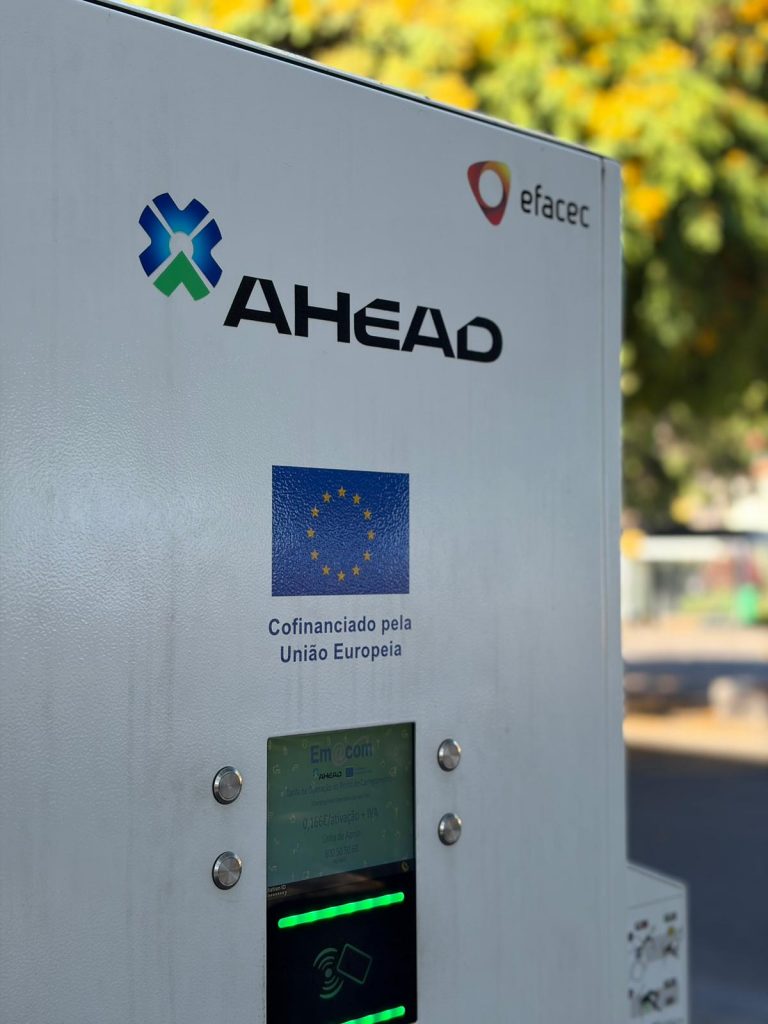
The first demonstration site in Funchal, Madeira’s capital, is located in a residentical block with a common parking lot. The activities in the demosite 1 aim to demonstrate the coordination of smart and bi-directional charging schemes to provide a range of flexibility services to the DSO. These units comprise two unidirectional chargers and two bidirectional chargers. To enable the demonstrations, the “flexibility sandbox” application will be developed, leveraging data from the birds-EView platform (including information on public Electric Vehicle Supply Equiment – EVSE) and from the advanced metering infrastructure (AMI) that will be deployed in the distribution systems at the junctures where the residential building is connected.
The second demonstration site in Funchal is located in the city centre. It aims to demonstrate the management of public EVSEs infrastructure considering the needs of two key stakeholders: 1) the municipality that needs to provide a public charging infrastructure; and 2) the DSO that needs to guarantee the quality of the electricity supply. Given the specific geographical context of the city, where the port is situated in the city downtown, this arrangement is feasible for experimentation with the charging of electric/hybrid boats already existing in the port.
The demo in Lisbon address the increasing demand for EVSEs in parking lots. The pilot is situated in the EDP LABELEC parking lot and it explores how advanced parking management strategies, simulating on-site renewable generation, such as rooftop PV, can balance EV user needs with local energy constraints. These strategies also aim to provide coordinated charging that supports both the local electrical infrastructure of the parking facility and DSO operations, enhancing overall system reliability. Recognising the increasing digital complexity of EV charging systems, the Lisbon pilot will also place strong emphasis on cybersecurity, ensuring safe and reliable access to the infrastructure.
Southern Europe demo
Milan (IT)
Kranj (SI)
The Milan demo test site is in the parking area of a primary HV/MV primary substation in Milan, Italy. This site serves as a charging hub equipped with both fast and slow electric vehicle (EV) charging stations. These stations support the operational and maintenance fleet used for grid servicing, as well as vehicles used for corporate car sharing. Currently, the site features 37 twin-socketed charging stations: 27 are single-phase 3.6 kW chargers, while 10 are wallboxes. Among the wallboxes, 8 are single-phase, 3.6 kW, and the remaining two are three-phase, 22 kW.
The Kranj demonstrator is located at the Arriva bus depot in the city of Kranj, a mixed residential–industrial urban setting with direct access to regional transport corridors and proximity to Elektro Gorenjska headquarters. The depot lies within the supply area of the Primskovo 110/20 kV primary substation, which provides the medium voltage (MV) source for the site’s existing and planned charging infrastructure. Protection coordination follows standard DSO practice on the MV side with customer-side protective devices and interlocks
Nordic demo
Roskilde (DK)
Danish countryside (DK)
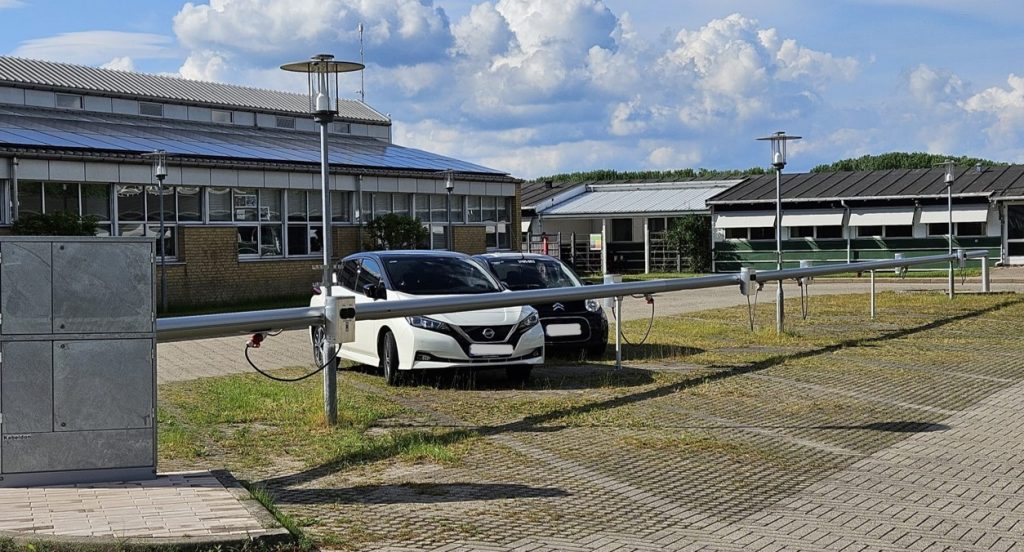
DTU’s Risø campus, in Roskilde, focuses on the interoperability of multi-brand chargers and showcases AC smart charging for employees and visitors of the adjacent office buildings. The site hosts multi-brand chargers with a combined nominal capacity of 132 kW but operates under a constrained 43 kW grid connection. It enables tests of dynamic load sharing, demand response, and coordinated control. On top of that, the site is integrated into an environment with a 30 kW photovoltaic and a 22 kW wind installation, allowing the exploitation of the synergies between renewable electricity generation and EV (smart) charging demand.
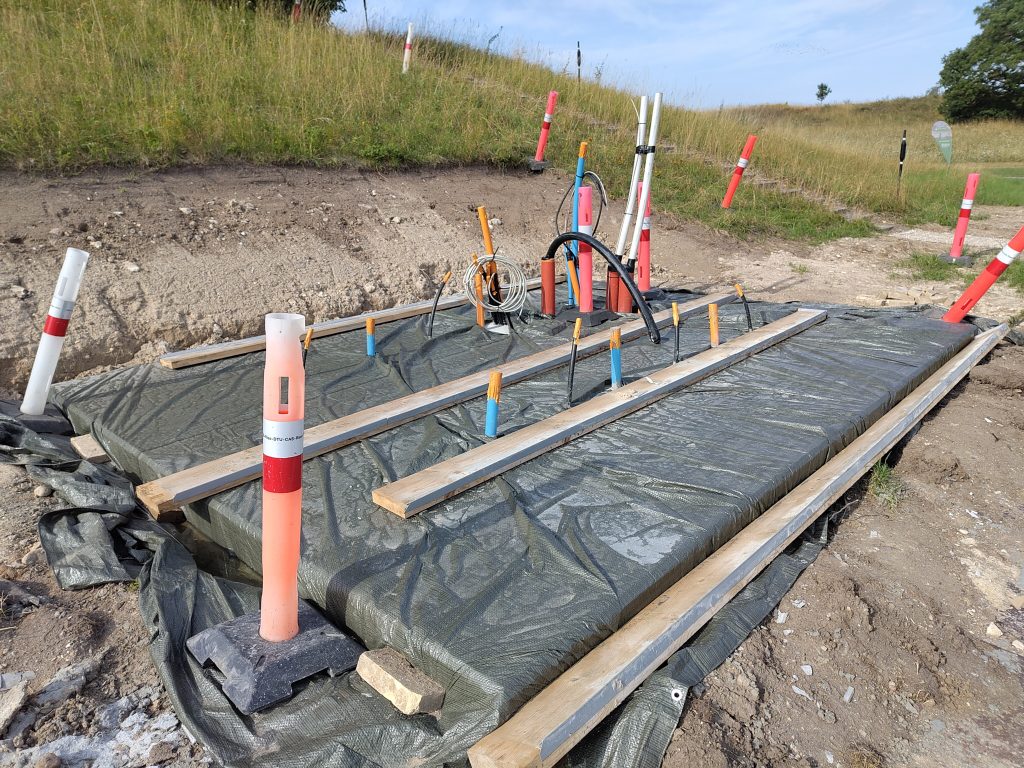
The second Nordic demo is located in the Danish countryside and it will provide public access to newly installed fast-charging infrastructure. Due to limited grid capacity (43 kW), the site will combine a Battery Energy Storage System (BESS) and local photovoltaic (PV) generation (20 kWp) to deliver up to 150 kW fast charging. This setup reflects future charging hubs by reducing grid dependency. The BESS (approx. 150 kW / 325 kWh) will support a 150 kW station with two distributed charging plugs. Located at a rural crossroads in Roskilde Municipality (approx. 90,000 inhabitants), the site will be monitored via KEMPOWER’s Chargeye, with maintenance provided by KEMPOWER and DTU.